
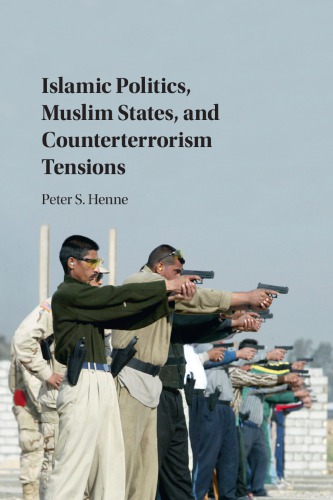
Islamic Politics, Muslim States, and Counterterrorism Tensions
-
 Writen byPeter Henne
 - PublisherCambridge University Press
- Year2017
Islamic Politics, Muslim States, and Counterterrorism Tensions provides a rigorous and empirically grounded analysis of why Muslim-majority states respond differently to United States-led counterterrorism initiatives despite shared exposure to extremist violence. Drawing on quantitative data and detailed case studies of Pakistan, the United Arab Emirates, and Turkey, Peter Henne demonstrates how variations in religion-state relationships, domestic political incentives, regime legitimacy, and Islamic political competition shape patterns of cooperation, resistance, and ambivalence toward external counterterrorism pressure. From a GRACE perspective, the book is highly relevant because it moves beyond simplistic cultural or ideological explanations of terrorism and counterterrorism, instead highlighting governance structures, political inclusion, and state-society relations as decisive factors. This analytical framing supports GRACE’s emphasis on moderation, prevention of radicalization, and long-term stability by illustrating how exclusionary or instrumentalized approaches to religion can intensify tensions, while more balanced and context-sensitive policies create space for coexistence, institutional legitimacy, and sustainable counter-extremism outcomes.The book’s main strength lies in its methodological rigor and theoretical innovation, particularly its integration of religion, political institutions, and international relations. It avoids securitized stereotypes of Islam and instead treats Islamic politics as a rational and structured component of state behavior. However, the work remains primarily analytical and policy-oriented; rehabilitation, reintegration, and grassroots peacebuilding are not central themes. Despite this limitation, the book is extremely valuable for identifying structural conditions that either mitigate or exacerbate radicalization and state-society mistrust—key concerns within the GRACE framework.