
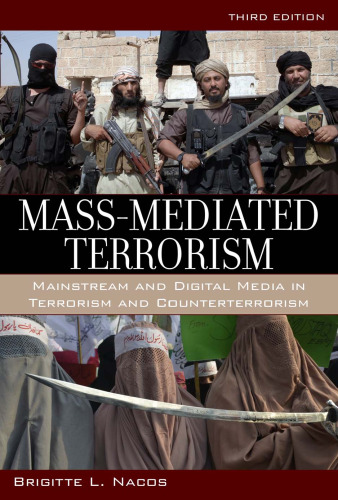
Mass-Mediated Terrorism:
-
 Writen byBrigitte L. Nacos
 - PublisherRowman & Littlefield Publishers
- Year2016
This book provides a comprehensive and updated analysis of how terrorism and counterterrorism are deeply shaped by mass media dynamics in both traditional and digital environments. Brigitte L. Nacos examines how terrorist organizations deliberately exploit mainstream news coverage and social media platforms to amplify fear, project power beyond their actual capabilities, disseminate propaganda, radicalize vulnerable audiences, and facilitate recruitment, including the emergence of lone-actor violence. The third edition places particular emphasis on social media ecosystems such as Twitter, Facebook, and YouTube, illustrating how direct communication channels have transformed extremist messaging strategies and reduced reliance on conventional media gatekeepers. From a GRACE Repository perspective, the book is highly relevant as it strengthens understanding of media-driven radicalization processes, highlights the psychological and societal impacts of terrorism messaging, and underscores the importance of responsible communication, digital literacy, and counter-narrative strategies as preventive and rehabilitative tools. Its focus on awareness, prevention, and societal resilience aligns closely with GRACE goals related to counter-extremism, community engagement, and safeguarding social cohesion.• Prevention of radicalization and violent extremism • Extremism awareness and media literacy • Counterterrorism and strategic communication • Social cohesion and public resilience • Youth vulnerability and digital engagement This book is a highly relevant and foundational resource for understanding the media–terrorism nexus and its implications for prevention-oriented and rehabilitation-informed counter-extremism strategies.The book’s major strength lies in its clear conceptual framework, empirical grounding, and balanced examination of both terrorist exploitation of media and democratic governments’ use of communication in counterterrorism. Its interdisciplinary approach makes it accessible to policymakers, researchers, educators, and practitioners. While the work focuses more on analysis than on structured rehabilitation or deradicalization programs, its insights are crucial for designing preventive interventions, ethical media practices, and digital counter-narratives. The emphasis on awareness and communication makes it especially valuable for early-stage prevention and resilience-building efforts.