Victimhood and Acknowledgement
-
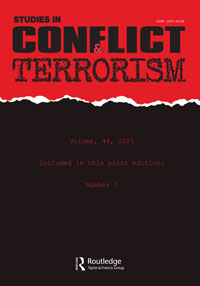
 Writen byMarie Breen-Smyth
 - PublisherDe Gruyter Mouton
- Year2018
This book examines how victimhood is defined, constructed, politicized, and acknowledged in the context of the Northern Ireland conflict, offering a detailed exploration of the lived experiences of victims and survivors and the institutional frameworks that shape policy responses. Breen-Smyth analyzes the contested nature of labels such as “victim” and “survivor,” highlighting how political actors, communities, and state mechanisms negotiate recognition, compensation, and legitimacy in a deeply divided society. Through empirical research, conceptual analysis, and ethical reflection, the work shows how memory, suffering, and acknowledgment become central in post-conflict governance and peacebuilding. Its contemporary relevance is strong: global counterterrorism contexts continue to struggle with issues of victim recognition, compensation, and inclusion, while post-conflict societies worldwide—such as Iraq, Sri Lanka, Afghanistan, and Colombia—face similar debates regarding who qualifies as a victim, how trauma should be addressed, and how narratives shape reconciliation. The insights offer practical guidance for designing victim-centered policies, improving truth and recovery mechanisms, and deepening community engagement through inclusive, participatory processes that avoid the politicization of suffering.The book’s strength lies in its nuanced understanding of victimhood as a socially constructed and politically contested category, grounded in deep empirical engagement and ethical analysis. Breen-Smyth offers a rare interdisciplinary blend of political science, sociology, and trauma studies, making the work both theoretically rich and policy-relevant. Its major contribution is the reframing of victimhood within broader debates on conflict memory and transitional justice, challenging simplistic binaries that often dominate terrorism-related discourse. A potential limitation is that its focus on Northern Ireland may narrow direct applicability for readers unfamiliar with the region’s history, although the conceptual frameworks are clearly transferable to other conflicts. The book also leans heavily toward qualitative methodology, which may feel less accessible to quantitatively focused researchers. Nonetheless, it remains a deeply authoritative and insightful work in the study of conflict, trauma, and post-terrorism recovery.