
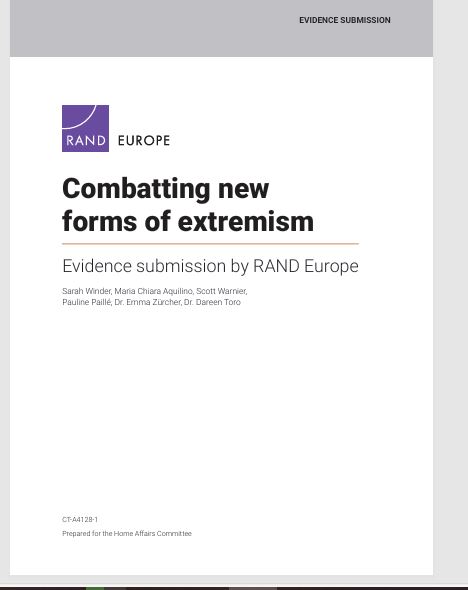
Combatting New Forms of Extremism
-
 Writen bySarah Winder, Maria Chiara Aquilino, Scott Warnier, Pauline Paillé, Emma Zürcher, Dareen Toro
 - PublisherRAND Corporation
- YearJuly 16, 2025
Combatting New Forms of Extremism is a policy brief published by RAND Corporation, providing insights into the evolving landscape of extremism, particularly focusing on the impact of digital platforms and social media in facilitating radicalization. The document examines the psychological, social, and political factors contributing to the rise of extremist ideologies, especially among youth. It discusses the challenges posed by online radicalization and the spread of extremist content through encrypted messaging apps, gaming servers, and mainstream social media platforms. The brief emphasizes the necessity for adaptive policy responses, community engagement, and the development of counter-narratives to combat the spread of extremist ideologies effectively. In an era characterized by rapid technological advancements and the pervasive influence of digital platforms, traditional methods of countering extremism are increasingly inadequate. This policy brief underscores the urgency of developing innovative strategies that leverage technology to monitor and counteract extremist content online. It advocates for the establishment of national hate crimes databases to enhance data collection and reporting, thereby informing more effective policy responses. Community engagement mechanisms highlighted include educational programs aimed at promoting critical thinking, media literacy, and resilience against extremist narratives among youth. Combatting New Forms of Extremism offers a timely and comprehensive analysis of the contemporary challenges in addressing extremism. Its focus on the digital dimension of radicalization provides valuable insights into the mechanisms of online extremism and the requisite policy responses. The work is a significant contribution to the field of counter-extremism studies, offering practical recommendations for policymakers, educators, and community leaders. The strength of this policy brief lies in its interdisciplinary approach, integrating insights from political science, sociology, psychology, and media studies to provide a holistic understanding of extremism. It effectively highlights the complexities of online radicalization and the need for multifaceted strategies to address the issue. However, the document's focus on the UK context may limit its applicability to other regions with different socio-political dynamics. Nonetheless, the brief's theoretical contributions and policy recommendations are valuable for advancing the discourse on counter-extremism.