

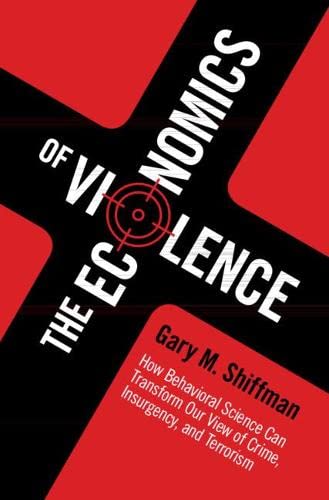
The Economics of Violence:
-
 Writen byGary M. Shiffman
 - PublisherCambridge University Press
- Year 2020
The Economics of Violence by Gary M. Shiffman takes a unique approach to understanding violence, especially in the context of crime, insurgency, and terrorism, through the lens of behavioral science and economics. Shiffman argues that human behavior, even in violent and coercive contexts, is more predictable than we may think. The book explores how individuals and groups make decisions driven by survival instincts and the pursuit of power, highlighting the way economic principles can help explain violent behaviors. Shiffman also emphasizes the role of "us vs. them" dynamics in fueling violence, while acknowledging the increasing opportunities for violence facilitated by digital communications and social media. The book proposes that by using insights from behavioral science, we can better structure policies and institutions to reduce violence and foster peace and security. Relevance with the Current Era along with Community Engagement Mechanism: This book is highly relevant today, especially in understanding the complex dynamics of modern violence, including terrorism, insurgency, and organized crime. Shiffman’s analysis of violence as driven by economic and behavioral incentives provides a framework for addressing these issues through policy and intervention strategies. The focus on digital communication’s role in exacerbating violent behaviors aligns with current trends in cyberterrorism and online radicalization. From a community engagement perspective, this book offers actionable insights into how societies can reduce violent behaviors and promote security. Its emphasis on applying behavioral science to violence can contribute to creating effective rehabilitation programs, conflict resolution strategies, and peacebuilding initiatives in communities affected by violence.Gary M. Shiffman’s work provides a groundbreaking perspective on violence by combining behavioral science with economic theory. His approach to modeling violence as a rational behavior driven by survival and competition opens up new avenues for understanding how insurgency and terrorism evolve. The book is deeply insightful for those involved in policy-making, conflict resolution, and security, offering practical strategies for addressing these global issues.This book is intended for scholars and professionals in economics, behavioral science, terrorism studies, security studies, and conflict resolution. It is also valuable for anyone interested in understanding the economic drivers of violence and how to mitigate them.