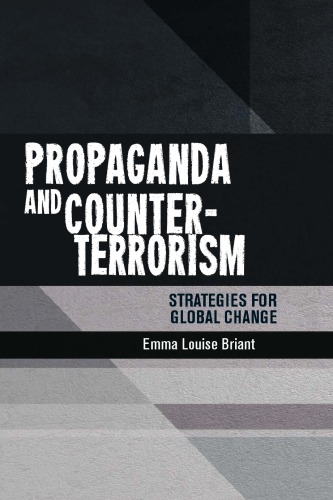
Propaganda and Counter-Terrorism:
-
 Writen byEmma Louise Briant
 - PublisherManchester University Press
- Year2015
Emma Louise Briant's Propaganda and Counter-Terrorism: Strategies for Global Change provides an in-depth analysis of how the British and United States governments adapted their propaganda strategies to address global terrorist threats in the post-9/11 media landscape. The book examines the coordination between these nations and the internal challenges they faced, leading to significant changes in propaganda practices. Briant highlights the implications of these changes on legitimacy structures, noting that many occurred without public discourse, raising concerns about governance. Drawing from interviews with prominent figures, including journalists, PR professionals, and key foreign policy, defense, and intelligence personnel, the book offers a comprehensive understanding of the evolution of propaganda in contemporary counter-terrorism efforts. In today's global environment, where information warfare and media influence are pivotal, Briant's analysis is highly pertinent. The book sheds light on the complexities of governmental communication strategies in combating terrorism, emphasizing the need for transparency and public accountability. Communities can engage with the content by fostering informed discussions on the ethical implications of propaganda, advocating for policies that ensure governmental transparency, and promoting media literacy to critically assess information disseminated by authorities.Propaganda and Counter-Terrorism is a significant contribution to understanding the intersection of communication, policy, and security in the modern world. Briant's meticulous research and insightful analysis make it a valuable resource for scholars, policymakers, and anyone interested in the dynamics of propaganda and counter-terrorism strategies.The book's strengths lie in its comprehensive research and the inclusion of firsthand accounts from key figures involved in propaganda strategies. Briant effectively contextualizes the evolution of propaganda within the broader political and media landscapes. However, the dense academic language may pose challenges for general readers. Compared to other works in the field, Briant's focus on Anglo-American relations and the post-9/11 context offers a unique perspective that enriches the discourse on propaganda and counter-terrorism.