
Human Rights Law and Counter Terrorism Strategies:
-
 Writen byDiane Webber
 - Publisher Routledge
- Year2022
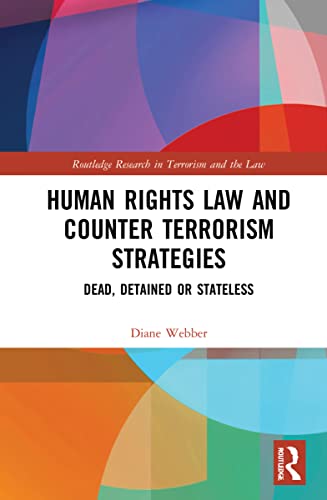
Human Rights Law and Counter Terrorism Strategies: Dead, Detained or Stateless by Diane Webber critically examines the intersection of counter-terrorism policies and human rights law. The book focuses on three primary strategies: preventive detention, targeted killing, and measures addressing returning foreign terrorist fighters. Webber analyzes how these approaches have often failed to respect human rights, potentially exacerbating the very issues they aim to resolve by pushing vulnerable individuals toward extremist activities. Through a comparative analysis of policies from countries such as the United States, United Kingdom, and Israel, the author highlights the legal and ethical challenges inherent in balancing national security with the protection of individual rights. In an era where terrorism remains a persistent threat, governments continue to implement robust counter-terrorism measures. However, these strategies often raise significant human rights concerns. Webber's analysis is particularly pertinent today, as it underscores the importance of developing policies that do not infringe upon fundamental human rights, thereby avoiding the alienation of communities and the potential for increased radicalization. The book's exploration of the consequences of citizenship revocation for foreign fighters and their families is especially relevant, considering ongoing debates about statelessness and the reintegration of individuals associated with terrorist organizations.Diane Webber's Human Rights Law and Counter Terrorism Strategies: Dead, Detained or Stateless offers a critical and timely examination of the complex relationship between national security measures and human rights obligations. The book provides valuable insights for policymakers, legal practitioners, academics, and students interested in understanding the legal and ethical implications of counter-terrorism strategies. By highlighting the potential adverse effects of policies that overlook human rights considerations, Webber advocates for approaches that uphold the rule of law while effectively addressing security concerns.